Healthy Grocery Shopping List: Build One From Meals You Actually Want to Cook
By Peter Sutarik · Updated
The short answer
A healthy grocery shopping list works best when it comes from specific meals you have already decided to cook, not from a generic list of good-for-you foods. Pick a few recipes that fit how you want to eat, write down every ingredient with its amount, cross off what you already have and group the rest by store aisle so you buy what the meals need and little else.
Why generic healthy food lists end up in the bin
Search for a healthy grocery list and you get long columns of foods: leafy greens, berries, salmon, quinoa, nuts, yogurt, a dozen vegetables. None of it is wrong. The trouble is that a list of ingredients is not a plan for eating them.
You buy the kale and the sweet potatoes because the list said so, then the week happens. Without a recipe attached, the kale has no job, and by Friday it is limp in the crisper drawer while you order takeout. Fresh food is the part of a healthy shop that goes off fastest, so it is also the part a vague list wastes most.
The fix is to reverse the order. Choose the meals first, then let the list fall out of the recipes. Every item on it then has a dinner, breakfast or lunch waiting for it, in a quantity that matches what you will actually use.
Decide what healthy means for your week
Healthy means different things to different households, and this page doesn't tell you what to eat. If a doctor or dietitian has given you specific guidance, that comes first. Otherwise, write two or three plain rules of your own at the top of the list before you choose recipes.
Good rules are concrete enough to check against a recipe. A few examples people use:
- Cook at home four nights this week instead of two.
- Every dinner has at least one vegetable that isn't a garnish.
- Make breakfast ahead on Sunday so weekday mornings aren't a pastry from the café.
- Try one new grain or legume a week, like quinoa or edamame.
- Keep sweet snacks to what you bake yourself.
How to build the list, step by step
Once the rules are written, the list itself takes a short sitting. It works on paper, in a notes app or in a recipe app that builds lists for you.
- 1
Pick the meals from recipes you saved
Go through the recipes you have bookmarked, saved from videos or written down, and choose the ones that pass your rules. Three or four planned meals plus one breakfast you can make ahead is a realistic week for most people. If your saves are scattered across apps, gather them in one place first.
- 2
Prefer recipes that share fresh ingredients
A bunch of herbs or a bag of greens bought for one dish tends to go to waste. If two recipes both use cucumber or parsley, that one purchase gets used up. This is the cheapest habit on the page and it matters most for produce.
- 3
Copy every ingredient with its amount
Write each line as the recipe gives it, quantity and unit included. If you cook for more or fewer people than a recipe serves, resize it first with the recipe scaler so you don't buy double the vegetables you need.
- 4
Merge the repeats and check the kitchen
Add together ingredients that appear in more than one recipe, then walk the list past the fridge, freezer and pantry. Cross off anything you already have enough of, and check amounts, not just whether the jar exists.
- 5
Add snacks and staples on purpose
Snacks and drinks are where an unplanned trip drifts. Write the ones you actually want, with quantities, like fruit for the week or a tub of yogurt, so you aren't deciding in front of the shelf.
- 6
Sort it by aisle
Group what's left into store sections and order them the way you walk through your usual store. The grocery shopping list guide covers the grouping in more detail.
A worked example from four saved recipes
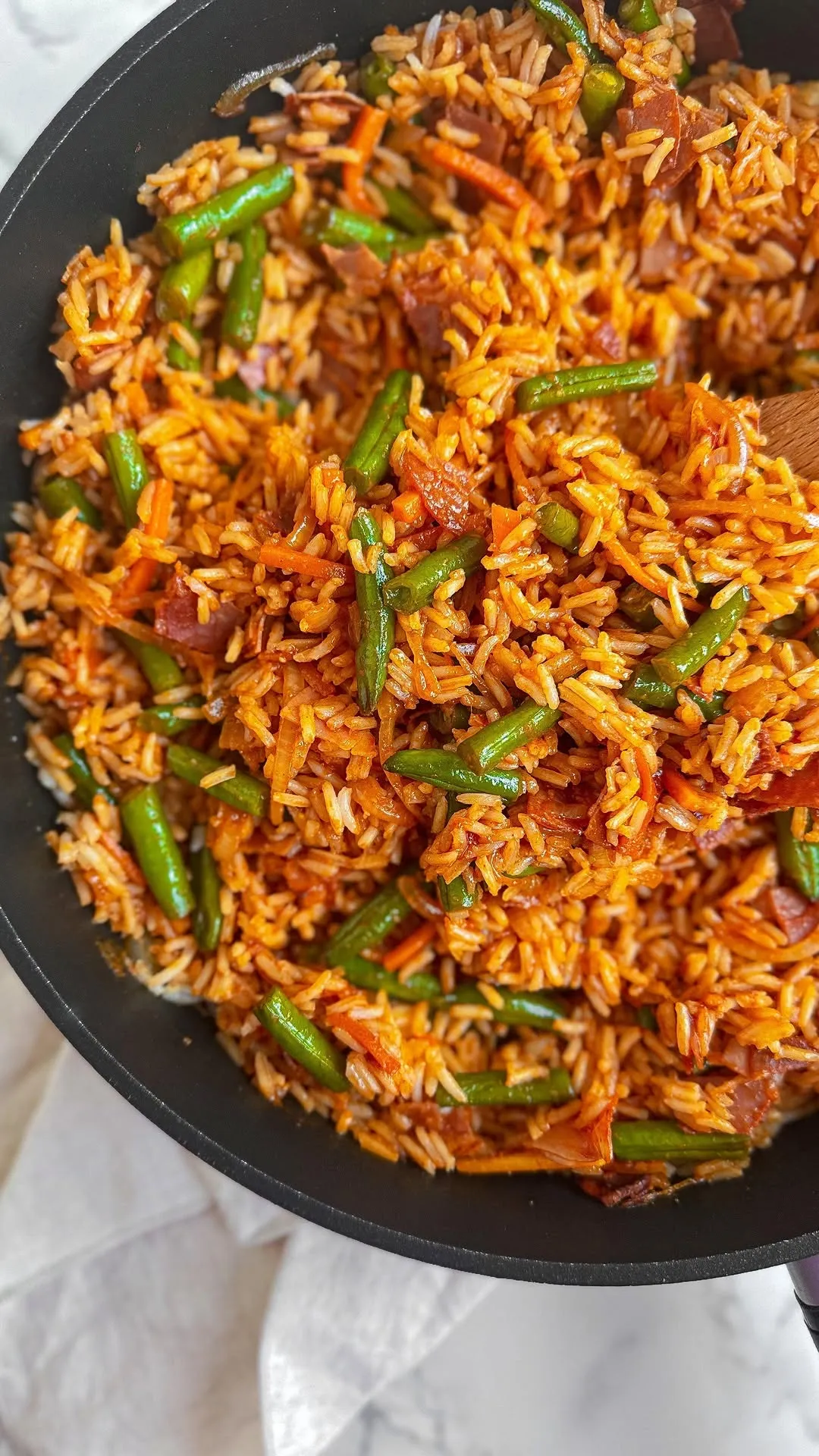
Here is a week built from sample recipes in our recipe collection, chosen against rules like the ones above: a make-ahead breakfast, a weekend brunch, a lunch that keeps for days and a vegetable-heavy dinner. The recipes are Matcha Chia Pudding, the Sweet Potato Fritter Breakfast Bowl, the Roasted Corn Quinoa Salad and One-Pan Tomato Fried Rice.
Grouped by aisle, the shopping list from those four recipes looks like this, before checking the pantry:
- Produce: 400 g sweet potatoes, 100 g mixed greens, half a bunch of fresh dill, 150 g blueberries, 3 corn on the cob, 1 cucumber, 1 lemon, 200 g green beans, 2 carrots, 1 onion.
- Meat and protein: 150 g smoked salmon.
- Dairy and eggs: 4 eggs, plus Greek yogurt if you want it on the chia pudding.
- Pantry: 60 g chia seeds, 2 tsp matcha powder, 2 tbsp maple syrup, 200 g quinoa, 3 tbsp olive oil, 120 ml vegetable stock, rice for 600 g cooked, 60 g flour.
- Spices and condiments: 2 tsp smoked paprika, 3 tbsp tomato paste, 60 g sun-dried tomatoes.
- Frozen: 150 g shelled edamame.
- Beverages: 400 ml oat milk.
What the example shows
Two things stand out. First, produce is the longest section by far, which is typical of a week built around vegetables and fruit, and it is the section to shop most carefully. Buy the amounts the recipes call for, not the family-size bag because it is there.
Second, half the pantry lines are probably already in your cupboard. Olive oil, flour, stock, paprika and tomato paste are the usual suspects. Checking them before you leave turns a long list into a short one, and a short list is easier to stick to in a store designed to sell you things that aren't on it.
Cook the most perishable meals first. Here that means the brunch bowl with its greens and dill early in the week, while the quinoa salad, which keeps for days, and the fried rice, which wants day-old rice anyway, come later. Frozen edamame waits in the freezer until you need it.
If you need to convert an amount between the recipe and the package, say grams of quinoa to cups, the kitchen conversion charts cover the common ingredients.
Building the list from recipes saved in videos
A lot of the recipes people actually want to cook now come from TikTok, Instagram Reels and YouTube, and that is where step three usually falls apart. The ingredients are spread across the caption, a pinned comment and whatever the cook says on camera, and copying them means pausing every few seconds.
ReelMeal is the iPhone app we make for this. You share a video to ReelMeal and it writes out the ingredients and steps as a recipe; recipe web pages and photos work too. The video to recipe page explains how, and there is a walkthrough for saving recipes from TikTok.
From a saved recipe, tap Add to shopping list. Every ingredient goes on your Shopping List with its amount, and when another recipe needs the same ingredient in the same unit, the lines are added together rather than listed twice. The list is grouped into Produce, Meat & Protein, Dairy & Eggs, Bakery, Pantry, Spices & Seasonings, Frozen, Beverages and Condiments & Sauces, so the merging and sorting are done for you.
The judgment stays with you: which recipes fit your rules, what is already in your fridge, which snacks to add. Items you type in yourself land under Other, ticked items stay out of later merges, and Clear Done removes them when you get home. The recipe to grocery list page has more detail.
Questions
What should be on a healthy grocery list?
The ingredients for the specific meals you plan to cook that week, with amounts, plus a short set of snacks and staples you chose on purpose. What counts as healthy depends on you and any guidance your doctor has given; the list's job is to make sure the food you meant to eat is the food you bring home.
How do I stick to a healthy shopping list in the store?
Shop with a list sorted by aisle so you move through each section once, write a quantity on every line, and decide snacks at home rather than in the aisle. Going with a list built from real meals also means you know what every item is for, which makes the extras easier to skip.
How do I stop fresh food going bad before I cook it?
Buy produce in the amounts your recipes call for, pick recipes that share fresh ingredients like herbs or greens, and cook the most perishable meals early in the week. Recipes that keep well, or that use frozen ingredients, belong at the end of the week.
Can I make a healthy grocery list from TikTok or Instagram recipes?
Yes. Save the videos you want to cook, get the ingredients written out, then build the list the usual way. ReelMeal turns a shared TikTok, Instagram or YouTube video into a written recipe and can add its ingredients to a shopping list grouped by aisle.
How many meals should I plan for one shop?
Three or four dinners plus a make-ahead breakfast is a realistic start for most households. It leaves room for leftovers and nights out, and you can add more once you know that amount actually gets cooked.