Grocery Shopping List Sample: A Format That Works, and How to Fill It From Your Recipes
By Peter Sutarik · Updated
The short answer
A good grocery shopping list has one line per item with the amount you will buy, grouped under store sections such as Produce, Dairy & Eggs, Meat & Protein and Pantry, and a short Other section for household items. Below is a real sample filled in from three dinner recipes, with repeated ingredients added together, followed by a blank form in the same format you can copy.
The format: what every line and section needs
Most printable templates give you a grid of empty boxes with category labels. The labels are the useful part. What makes a list work in the store is what goes on each line, and a template can't fill that in for you.
A format that holds up on a real shopping trip has four parts:
- Sections in the order you walk the store. Produce first, then bakery, dairy, meat, frozen, the dry pantry aisles and drinks is a common route; reorder it for your own shop.
- One item per line, written the way the shelf sells it: 1 bunch parsley, 1 cucumber, 500 g chicken thighs.
- A quantity on every line, including staples, so you don't come home with one onion when the recipes need three.
- A short note only when it changes what you pick up, such as boneless, plain, or any substitute you'd accept if the shelf is empty.
A grocery shopping list sample, filled in
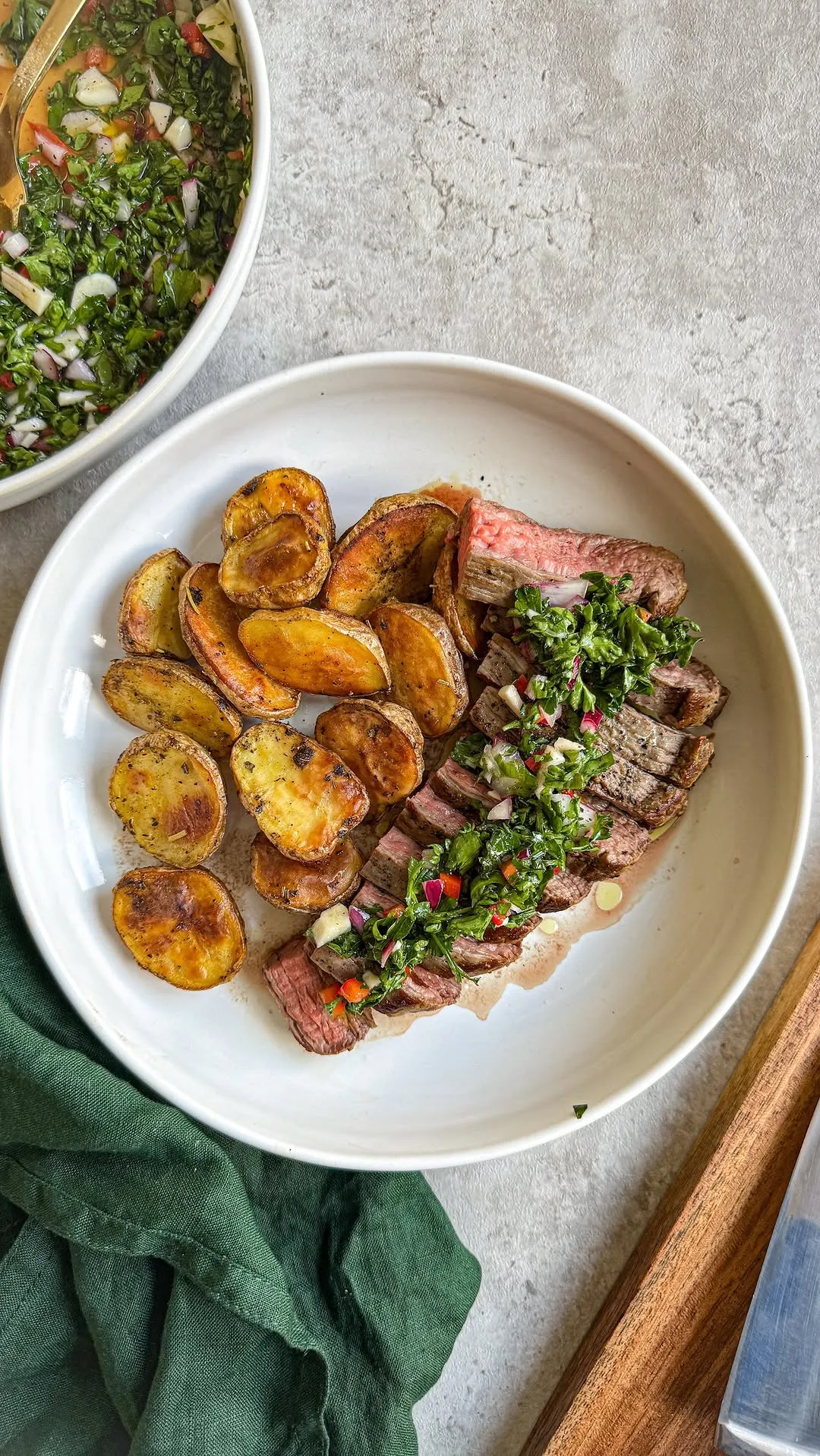
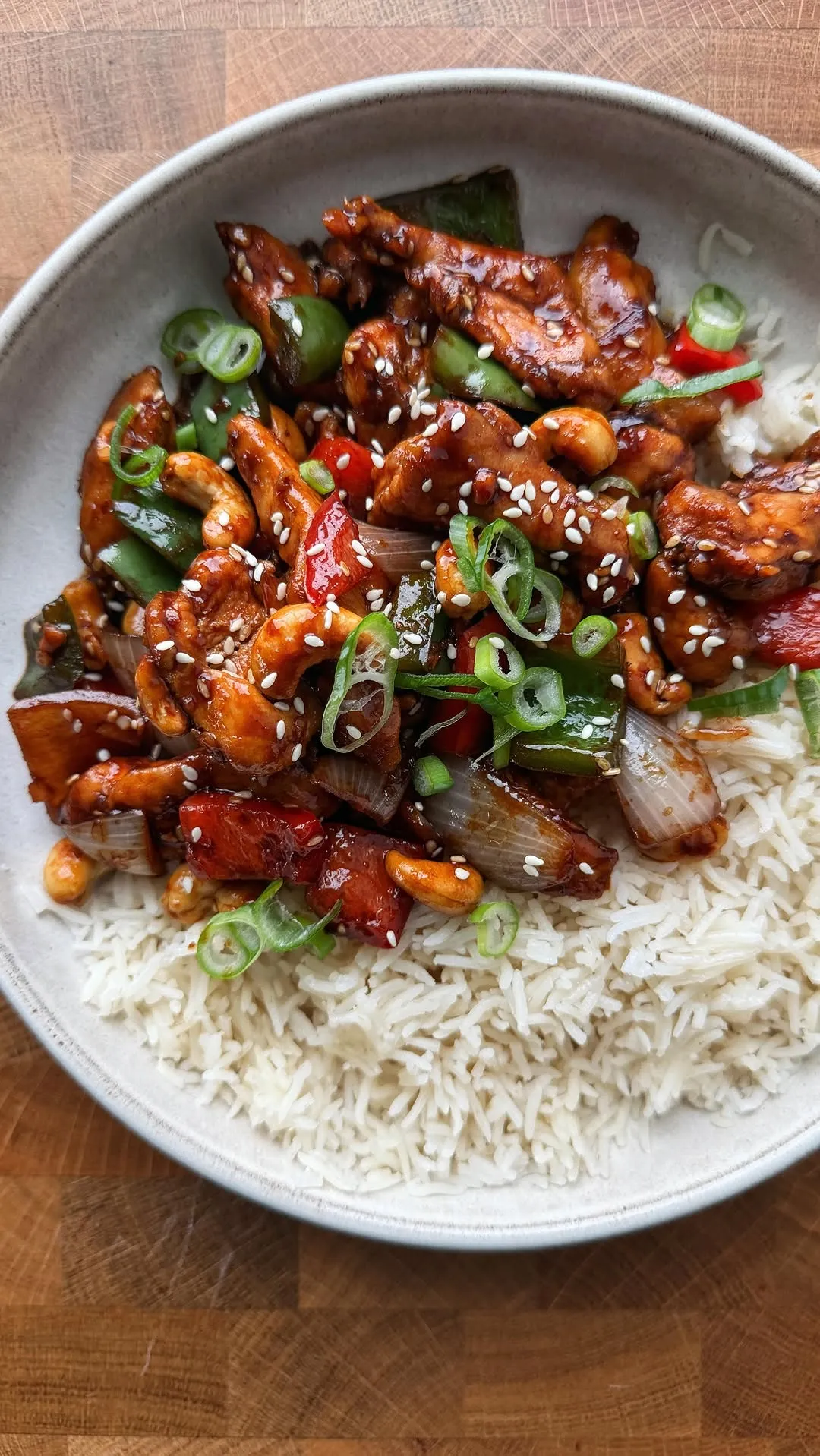
This sample covers three dinners taken from the sample recipes on this site: Honey Cashew Chicken for four, Steak with Chimichurri for two, and Harissa Meatballs with Whipped Feta for four. Every ingredient from the three recipes is on it, grouped by section. Two ingredients appear in more than one recipe and have been added together: garlic (3 cloves plus 2 cloves) and fresh parsley (one bunch for each of two recipes).
Produce: 1 head garlic (5 cloves needed); 1 small piece fresh ginger (1 tablespoon grated); 1 red bell pepper; 2 green onions; 500 g baby potatoes; 600 g potatoes; 2 bunches fresh parsley; 1 cucumber; 1 red onion.
Dairy & Eggs: 200 g feta cheese; 250 g plain Greek yogurt.
Meat & Protein: 500 g boneless chicken thighs; 400 g sirloin steak; 500 g ground lamb.
Pantry: 300 g jasmine rice; 100 g roasted cashews; honey (3 tablespoons); cornstarch (1 tablespoon); olive oil (80 ml); sesame seeds, optional.
Spices & Seasonings: chili flakes (half a teaspoon); sea salt.
Condiments & Sauces: soy sauce (60 ml); red wine vinegar (2 tablespoons); harissa paste (2 tablespoons).
Other: whatever the household needs that isn't in a recipe, such as milk for coffee, bread, dish soap.
Notice what happens before you leave the house. Honey, cornstarch, olive oil, salt, soy sauce and vinegar are amounts, not packages, and most kitchens already have them, so they get checked against the cupboard and crossed off if there's enough. In a typical kitchen that cuts the Pantry, Spices and Condiments sections down to the jasmine rice, the cashews and the harissa paste. The produce and meat lines are the ones that decide whether the week's dinners actually happen.
A blank grocery shopping list form to copy
Copy this into the Notes app, a document or a sheet of paper. Keep the section headings and leave a few empty lines under each. The top block is the part you fill in each week from your recipes; the bottom block is for things you buy regardless of what you're cooking.
- Meals this week: one line per recipe, with the number of servings you'll cook.
- Produce: item, amount to buy, amount the recipe needs if different.
- Bakery: item, amount.
- Dairy & Eggs: item, amount.
- Meat & Protein: item, weight or count, any note such as boneless or skin-on.
- Frozen: item, amount.
- Pantry: item, amount. Check the cupboard before writing.
- Spices & Seasonings: item. Check the jar is not nearly empty.
- Condiments & Sauces: item, amount.
- Beverages: item, amount.
- Other: household and non-food items.
- Staples running low: anything you used up during the week, added the moment it ran out.
How to fill the form from your recipes
The form is only as good as the way you fill it. This order keeps the list short and complete.
- 1
Write down the meals and servings
List the three or four recipes you will really cook before the next shop. If you're feeding more or fewer people than a recipe serves, resize it first with the recipe scaler so the amounts you copy are the amounts you'll use.
- 2
Copy each ingredient into its section
Go one recipe at a time and put each ingredient under its section with the amount the recipe gives. Write fresh herbs under Produce, not with the dried spices, because they sit at opposite ends of most stores.
- 3
Add up the repeats
When an ingredient is already on the list, add the new amount to the old line instead of writing it twice, as long as the units match. Different units need converting first; the kitchen conversion charts cover cups, spoons, grams and ounces.
- 4
Turn amounts into packages
Rewrite each line as what you'll pick off the shelf: 5 cloves of garlic becomes one head, a tablespoon of grated ginger becomes a small knob of ginger, 60 ml of soy sauce becomes one bottle if you're out.
- 5
Check the kitchen and cross off
Walk the list past the fridge, freezer and cupboards. Cross off anything you already have enough of, and check quantities rather than just whether the jar exists.
- 6
Add the Other section last
Copy across your running list of staples and household items. Those don't come from recipes, so they belong at the end where they don't get mixed into the meal ingredients.
Typical items on a grocery list
If you're starting from nothing, most weekly lists end up with the same kinds of items: a few vegetables and fruit, onions and garlic, one or two proteins, eggs, milk, yogurt or cheese, bread, rice or pasta, canned tomatoes or beans, and whatever cleaning and paper goods are running out.
That general list tells you what a kitchen usually contains. It won't tell you that this week you need two bunches of parsley and a jar of harissa. For that you need the recipes, which is why the sample above starts with meals and not with a list of typical items. If you want a longer staples checklist, the grocery shopping list basics guide has one.
Let ReelMeal fill in the format for you
If your dinner ideas come from cooking videos, step two of the form is the slow part: the ingredients are split between the caption, the comments and what the cook says on camera. ReelMeal is the iPhone app we make for this. You share a TikTok, Instagram or YouTube video, or a recipe web page, and it writes out the ingredients and steps as a recipe; the video to recipe page shows how.
On a saved recipe, tap the shopping cart button and the app confirms with Added to List. Or open the Shopping List, choose Add from Recipes, tick several recipes and set the servings for each before adding them. Each ingredient lands on the list with its amount, sorted into Produce, Bakery, Dairy & Eggs, Meat & Protein, Frozen, Pantry, Spices & Seasonings, Condiments & Sauces and Beverages. When two recipes need the same ingredient in the same unit, the amounts are added together rather than listed twice, which is exactly what happened with the garlic and parsley in the sample above.
You still do the steps that need your eyes: checking the fridge and deleting what you already have, and typing in household items, which go under Other. Tick items off in the store, and Clear Done removes them once you're home. The recipe to grocery list page has more detail.
Questions
What is the best format for a grocery list?
A list grouped by store section, in the order you walk the store, with one item and one quantity per line. Keep a separate section at the end for household items that don't come from recipes.
Should I write quantities as the recipe gives them or as the store sells them?
Copy the recipe amounts first so you can add repeats together, then convert each line to what the shelf sells, such as a bunch, a can or a pack. Keeping the recipe amount in brackets helps when a store only has a bigger or smaller size.
How many sections should a grocery list have?
Eight to ten is enough for most supermarkets: produce, bakery, dairy and eggs, meat, frozen, pantry, spices, condiments, drinks and an other section for non-food items. More than that and you spend time deciding where an item goes.
Is a printable template or a phone list better?
A printable form is fine if you fill it from your recipes and keep it in the order of your store. A phone list is easier to keep up to date during the week and can add up repeated ingredients for you if it's built from recipes.