Grocery Shopping List Basics: The Staples to Keep, and What to Add from Your Recipes
By Peter Sutarik · Updated
The short answer
A basic grocery list works best in two parts: a short list of staples you keep in the kitchen and restock only when they run low, and a separate list of the specific ingredients this week's recipes need. The staples rarely change, so you check them; the recipe half changes every week, so you build it fresh from the meals you picked.
Why one long list of essentials doesn't work
Most basic grocery lists you find online are a single column of forty or fifty essentials: flour, rice, canned beans, eggs, a dozen vegetables, a few cuts of meat. Read as a list of things a kitchen might contain, they are fine. Read as a shopping list, they make you buy too much of what you already have and still miss what Thursday's dinner needs.
The problem is that they mix two different kinds of food. Some things you use a little of in almost every meal and buy every few weeks, like oil, salt and onions. Others you buy for one recipe, like a bunch of cilantro or a pack of chicken thighs, and if that recipe doesn't get made, they go to waste.
Splitting the list along that line is the whole trick. The staples half becomes a short checklist you glance at before each shop. The recipe half becomes a list you write from scratch, and it is the half that decides whether you can cook what you planned.
The basics: a short staples list to keep stocked
These are the items most home cooks reach for across many different recipes. Treat this as a starting point and cut anything you never use; a staples list that matches your cooking is better than a complete one. Buy each item when it runs low, not every week.
- Oils and fats: a neutral cooking oil, olive oil, butter.
- Seasoning: salt, black pepper, and the three or four dried spices you actually use, such as paprika, cumin, chili flakes or dried oregano.
- Long-keeping produce: onions, garlic, potatoes, and lemons or limes.
- Grains and starches: rice, a dried pasta shape you like, rolled oats, all-purpose flour.
- Cans and jars: canned tomatoes, one or two kinds of canned beans, stock or bouillon, tomato paste.
- Condiments: soy sauce, a vinegar, mustard, a hot sauce, honey or sugar.
- Fridge basics: eggs, milk or a milk alternative, a hard cheese that keeps.
- Freezer: one frozen vegetable, such as peas or spinach, for nights when the fresh food is gone.
- Breakfast and bread: whatever your household eats every day, whether that is bread, cereal, yogurt or fruit.
How to keep the staples half simple
The staples list only saves time if checking it is quick. A few habits help.
- 1
Write it once and keep it
Put your staples on a note, a card on the fridge or the inside of a cupboard door, grouped the way your kitchen is organized: fridge, pantry, spice shelf, freezer. You won't rewrite it, you'll only check it.
- 2
Add an item the moment it runs low
When you open the last can of tomatoes or see the oil bottle is nearly empty, put it on the week's list right then. Waiting until shopping day turns it into a memory test, and memory loses.
- 3
Buy staples in sizes you finish
A big bag of rice is a good deal if you cook rice twice a week. A large jar of a spice you use twice a year goes stale first. Match the pack size to how fast you go through it.
- 4
Prune the list every month or two
If something on your staples list hasn't been bought or used in weeks, it isn't a staple for you. Take it off, and add anything you keep buying for recipes again and again.
The other half: what your recipes need this week
This is the part a generic basics list can't give you, because it depends on what you are cooking. Choose three or four meals you will realistically make before the next shop, then copy every ingredient each recipe calls for, with its amount. "Onions" is not enough when one recipe needs one and another needs three.
Next, cross off anything your staples already cover. If a recipe calls for two tablespoons of soy sauce and you have a bottle, it doesn't go on the list. What remains is usually short and specific: fresh herbs, a particular cut of meat or fish, a vegetable you don't keep around, a cheese, a sauce you don't own yet.
Add together ingredients that appear in more than one recipe, but only when they are the same thing in the same unit. If you are cooking for more or fewer people than a recipe serves, resize it first with the recipe scaler so you don't buy double the fresh food you need. When a recipe gives grams and the package gives ounces, the kitchen conversion charts cover the common cases.
Finally, group both halves together by store section, produce first and frozen last, so you walk each aisle once. The grocery shopping list guide goes through the aisle grouping in more detail.
A simple grocery list in practice
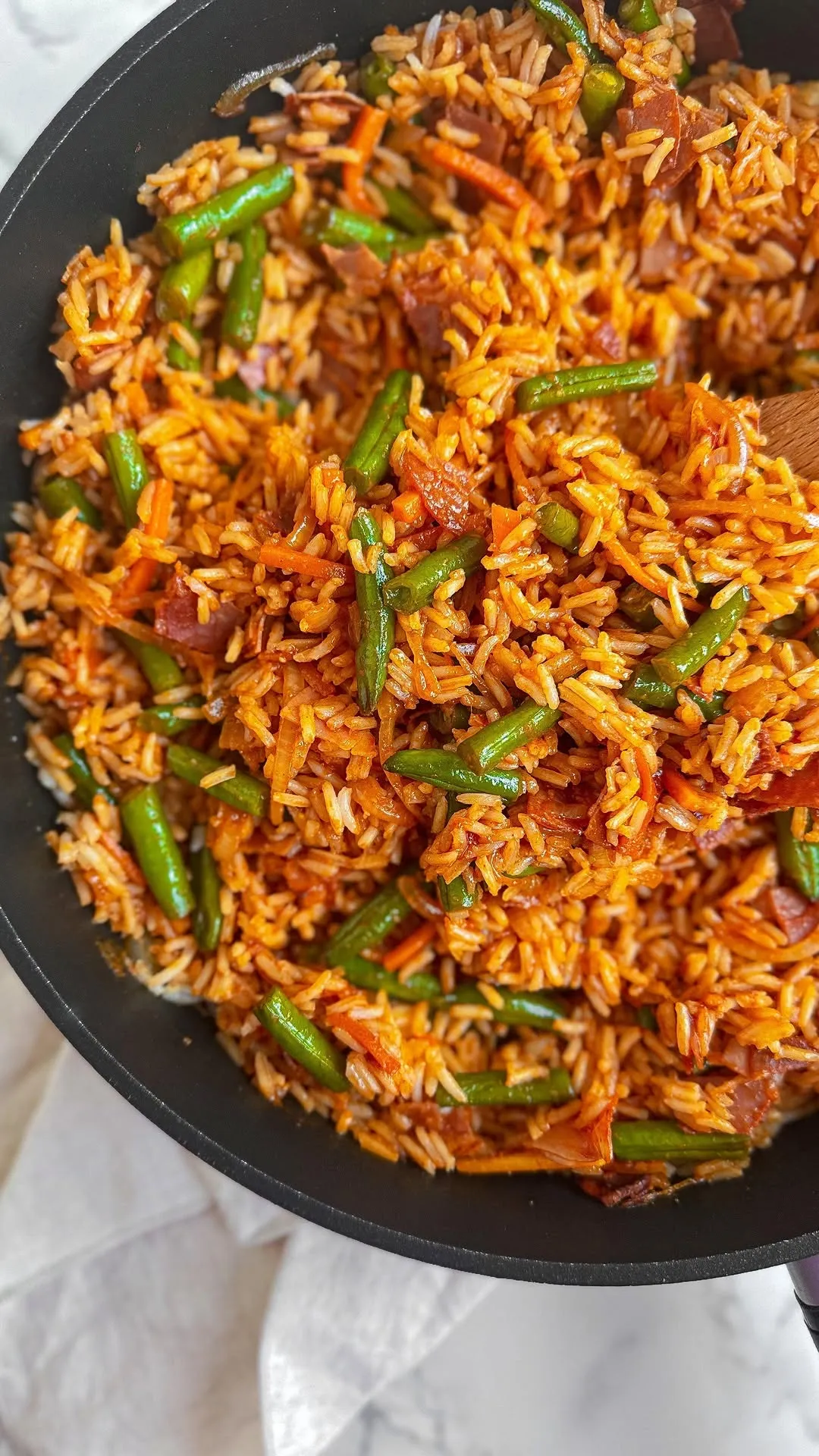
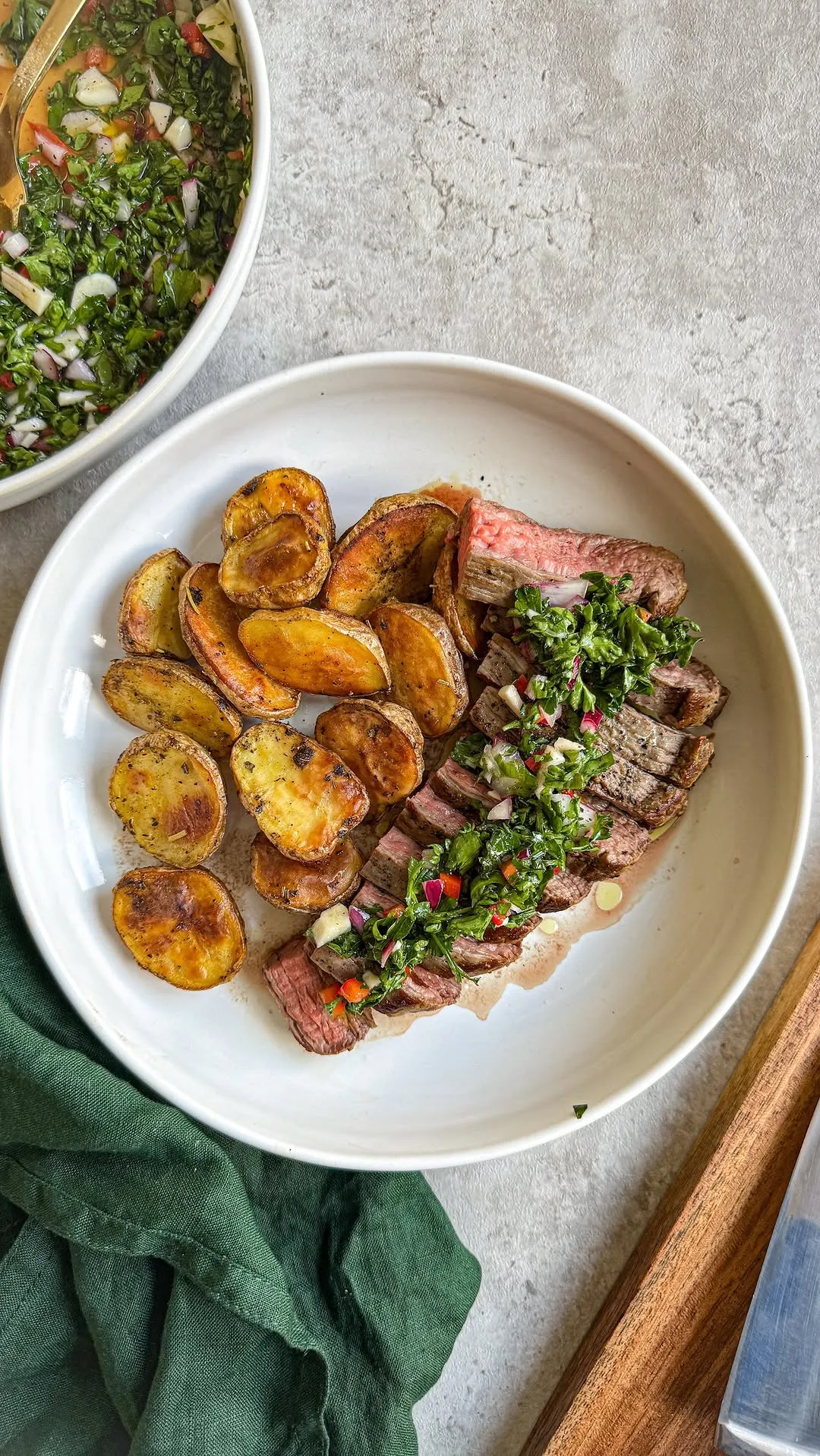
Say the plan this week is One-Pan Tomato Fried Rice and Steak with Chimichurri from our sample recipes. Between them they call for fifteen ingredients. A kitchen with the staples above probably already has the rice, onion, garlic, tomato paste, vegetable stock, olive oil, salt, chili flakes and smoked paprika, and maybe the red wine vinegar. The recipe half of the list shrinks to what those dishes are actually built around: a sirloin steak, a bunch of fresh parsley, baby potatoes, green beans and carrots.
That is the point of keeping staples separate. Two dinners turn into five lines instead of fifteen, and every item on the list has a meal waiting for it. If you want ideas for which recipes to put in the plan in the first place, grocery list ideas has a few ways to choose.
Building the recipe half from saved videos in ReelMeal
Plenty of the recipes people want to cook now come from TikTok, Instagram Reels and YouTube, and copying the ingredients out of a video by hand means pausing every few seconds and digging through the caption and comments. That is the slow part of the recipe half.
ReelMeal is the iPhone app we make for this. You share a video, a recipe web page or a photo to ReelMeal and it writes out the ingredients and steps as a recipe; the video to recipe page shows how. From a saved recipe you add its ingredients to your shopping list with their amounts. Add a second recipe and lines that are the same ingredient in the same unit are added together instead of listed twice, and the whole list is grouped by aisle.
Your staples still need a quick check by you, because the app doesn't know what is in your cupboard. Check off items as they go into the cart; checked items stay out of later merges, so adding another recipe mid-shop won't undo what you've already bought. The recipe to grocery list page has the details.
Questions
How do I start a grocery list from nothing?
Start with the meals. Pick three or four dinners you will actually cook, write down every ingredient with its amount, then add the handful of staples you are out of. Once you have done this two or three times, the staples you keep rebuying become your permanent basics list.
What are the basic items every grocery list should have?
There isn't one list that suits every kitchen, but most cooks keep cooking oil, salt and pepper, onions and garlic, rice or pasta, canned tomatoes and beans, eggs, and a few condiments. Keep only the staples you use across several recipes and buy them when they run low.
How can a basic grocery list help me spend less?
Most overspending comes from buying food without a job for it. A list built from planned meals, with your staples checked before you leave, means you buy what those meals need in the amounts they need. Shopping one store section at a time with a written list also makes impulse picks easier to skip.
What should a simple grocery list for two people include?
The same two halves, scaled down: a smaller staples list and the ingredients for a few planned meals. Pick recipes that share fresh ingredients, like a bunch of herbs used in two dishes, so a small household isn't throwing out half of everything it buys.
How often should I restock staples?
Only when they run low. Note each staple on the week's list the moment you open the last one, and check the staples list before every shop. Buying staples on a schedule instead of by need is how cupboards fill up with three jars of the same spice.